A Gown for Every Chapter: How to Choose a Wedding Dress That Stands the Test of Time

Photo by Photo by Marius Muresan on Unsplash on Unsplash
For most brides, the wedding gown represents one of the most significant wardrobe investments of a lifetime. Yet the conversation surrounding bridal fashion rarely extends beyond the wedding day itself. The truth is, a carefully chosen gown can accompany you through decades of life—from engagement portraits and rehearsal dinners to anniversary vow renewals and milestone celebrations. The key lies not in chasing the season's most talked-about silhouette, but in identifying the qualities that make a dress genuinely enduring.
Thinking of your gown as a long-term investment rather than a single-occasion garment shifts the entire selection process. Suddenly, the question is no longer simply What makes me look beautiful today? but rather What will make me feel extraordinary for years to come?
Why Timelessness Matters More Than Trend
Bridal fashion, like all fashion, moves in cycles. The silhouettes celebrated in bridal magazines this season will inevitably give way to new directions within a few years. This is not a reason to ignore current offerings entirely—many contemporary designs contain genuinely classic elements—but it is a reason to approach trend-driven details with measured enthusiasm.
Consider the difference between a gown defined by an architectural ruffle that dominates its entire bodice and one that features refined, understated lace along a fitted sleeve. In photographs taken a decade from now, the former will read unmistakably as a product of its moment; the latter will simply read as beautiful. When evaluating any dress, ask yourself honestly whether its most distinctive features are rooted in enduring elegance or in the specific appetite of this particular season.
The Silhouettes That Transcend Decades
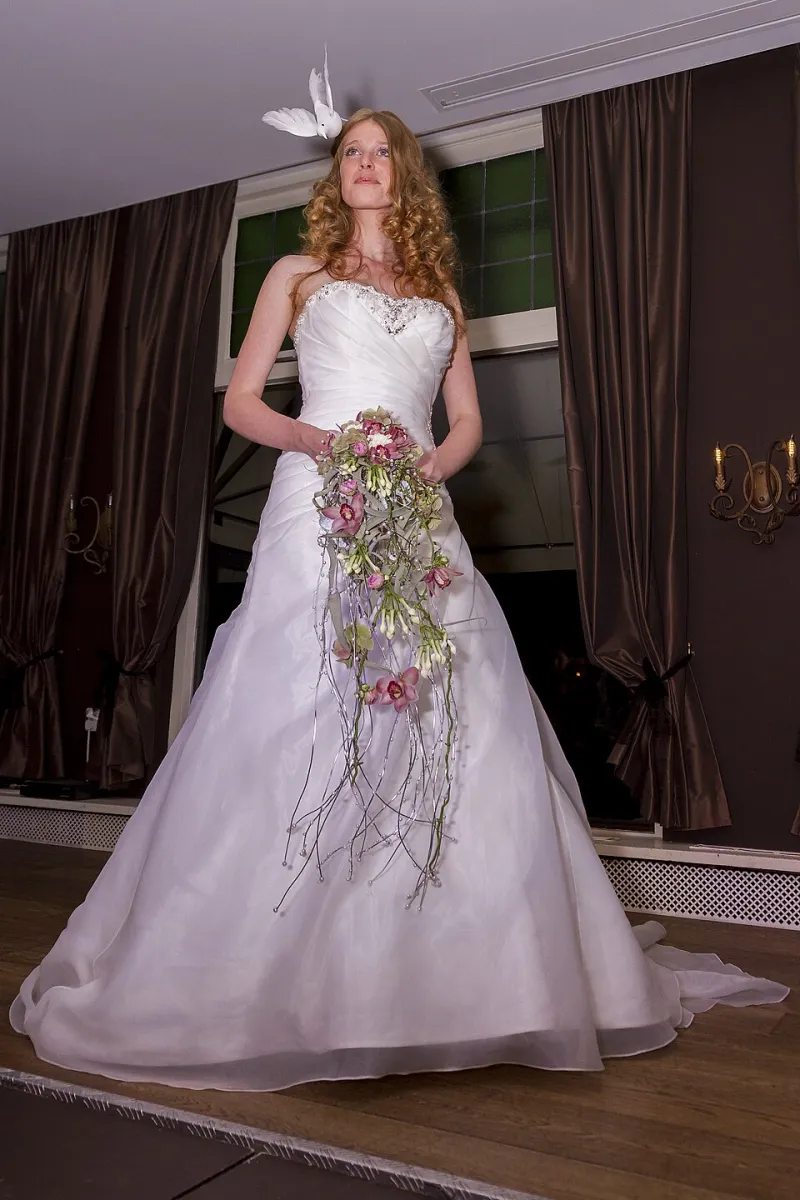
Certain silhouettes have demonstrated remarkable staying power across generations of brides. The A-line gown, with its fitted bodice and gently flared skirt, flatters an exceptionally wide range of body types and has remained a staple of bridal design for well over half a century. Its proportions are inherently balanced, and it photographs beautifully under virtually every lighting condition—an important consideration given how thoroughly you will revisit those images over the years.
The column or sheath silhouette carries a similarly timeless quality, particularly when executed in a refined fabric such as crepe or silk charmeuse. Its clean lines resist the visual dating that more voluminous or heavily embellished designs often suffer. The fit-and-flare, when cut with restraint rather than dramatic exaggeration, also holds up admirably across time.
By contrast, silhouettes defined primarily by extreme volume—whether through layers of tulle that create an almost architectural effect or trains of unusual and impractical lengths—tend to feel more closely tethered to the moment of their creation. This does not mean they are wrong choices; it simply means that brides who select them should do so with clear eyes about their long-term versatility.
Fabric as a Foundation for Longevity
The fabric of your gown is arguably its most important long-term attribute. Natural fibers such as silk, duchess satin, and fine cotton lace age with a grace that synthetic alternatives rarely match. Silk in particular develops a subtle luminosity over time, and its durability—when properly preserved—is extraordinary.
Crepe is another fabric worth serious consideration for the bride thinking beyond the wedding day. It drapes elegantly, wrinkles minimally, and maintains its structure through years of careful storage. Mikado, a firm silk blend, offers similar resilience and photographs with exceptional richness.
Synthetic fabrics such as polyester charmeuse or nylon tulle are not without merit—they are frequently more affordable and easier to maintain—but they tend to show their age more readily, both in how they feel against the skin and in how they appear in photographs over time.
Design Details Worth Investing In
The details of a gown are where timelessness and trend most visibly intersect. As a general principle, embellishments that serve a structural or design purpose—a carefully placed lace appliqué, a row of covered buttons along the back, delicate beading at the neckline—tend to age more gracefully than those that exist primarily as fashion statements.
Neckline is another detail that rewards careful consideration. Deep plunges, highly asymmetric cuts, and necklines shaped by heavily padded or stiffened construction can feel dated more quickly than a classic sweetheart, a simple V-neck, or a refined bateau. Similarly, sleeve styles that draw from tailoring traditions—long lace sleeves, delicate cap sleeves, or elegant off-the-shoulder construction—tend to hold their appeal far longer than those defined by novelty.
Color is a subtler consideration, but it matters. The spectrum of white is wider than most brides initially appreciate. Ivory and champagne tones tend to be universally flattering and photograph beautifully across a range of skin tones, while brighter, starker whites can be more challenging to wear gracefully in photographs taken under natural light.
Planning for Alterations and Restyling
One of the most practical ways to extend the life of a wedding gown is to choose one that can be thoughtfully altered or restyled over time. A dress with a detachable train, for example, becomes a genuinely wearable formal gown once the train is removed. Overskirts and structured underpinnings that can be separated from a fitted inner dress offer similar flexibility.
When working with your bridal consultant or seamstress during fittings, ask specifically about the alteration potential of any gown you are seriously considering. A skilled seamstress can often shorten a hem, remove or replace sleeves, or adjust a neckline to refresh a dress's appearance for a future occasion—but only if the underlying construction supports such changes. Gowns with heavily boned bodices, complex internal structures, or delicate embellishments that extend to every seam offer considerably less flexibility than those with cleaner, more adaptable lines.
Storing Your Gown to Preserve Its Future
Even the most thoughtfully chosen gown cannot fulfill its long-term potential if it is not properly preserved. Professional cleaning and archival boxing following the wedding is an investment that pays for itself many times over. Acid-free tissue, breathable preservation boxes, and storage in a climate-controlled environment will protect your gown's fabric, structure, and color for decades.
Avoid storing your gown in plastic, which traps moisture and can cause yellowing. Check on the dress periodically—every few years—to refold it along different lines and prevent permanent creasing.
The Dress That Grows With You
The most meaningful bridal gowns are not simply beautiful objects; they are wearable records of a significant moment, designed with enough integrity and versatility to remain relevant through every chapter that follows. When you approach your gown selection with an eye toward longevity—prioritizing enduring silhouettes, quality fabrics, restrained embellishment, and alteration-friendly construction—you are not limiting your choices. You are expanding them, ensuring that the dress you wear on your wedding day remains a source of joy and pride for the rest of your life.