Where Wedding Money Actually Goes Wrong: A Bride's Guide to Spending Smart, Saving Strategically, and Stopping Budget Creep Before It Starts
There is a particular kind of financial surprise that catches engaged couples completely off guard — not the large, obvious expenses, but the dozens of small ones that arrive quietly, each feeling entirely reasonable in isolation. A signature cocktail upgrade here. A second photographer for the rehearsal dinner there. A few extra centerpiece blooms that suddenly became a full floral redesign. Individually, none of these decisions feel reckless. Collectively, they can add tens of thousands of dollars to a budget that started with the best intentions.
This is wedding creep — and it is far more common than most brides anticipate. Understanding why it happens, where it tends to strike hardest, and how to build genuine financial guardrails around your planning process is one of the most valuable things you can do in the months between your engagement and your wedding day.
Why Budgets Drift: The Psychology Behind the Overspend
Before examining specific line items, it is worth understanding the emotional patterns that drive overspending. Wedding planning operates in a uniquely charged psychological environment. The decisions feel deeply personal, the stakes feel high, and the cultural messaging around weddings — from social media to vendor marketing — consistently frames upgrades as acts of self-respect rather than financial risk.
Research in behavioral economics describes a phenomenon called "purchase momentum," in which committing to a large expense makes subsequent smaller purchases feel trivial by comparison. After signing a $12,000 venue contract, spending $800 on a cake upgrade registers as almost nothing. This cognitive distortion is extraordinarily common in wedding planning, and vendors are often well-positioned to leverage it.
Additionally, many couples fall into what planners sometimes call the "while we're at it" trap. Once a vendor relationship is established, expanding the scope of that relationship feels easier than sourcing something new. Your florist can handle the rehearsal dinner arrangements while they're at it. Your caterer can add a late-night snack station while they're at it. Every one of these additions may feel logical in context — and every one of them costs money that was never allocated.
The Hidden Costs Most Brides Don't See Coming
Certain budget categories are notorious for concealing their true costs until invoices arrive.
Gratuities and service charges are perhaps the most consistently underestimated line item in wedding budgets. Many couples are surprised to discover that venue and catering contracts often include a service charge — sometimes as high as 22 to 25 percent — that is distinct from any tip you may wish to leave. On a $10,000 catering bill, that charge alone represents $2,200 to $2,500. Before signing any contract, ask explicitly what service charges are included, whether they are distributed to staff, and what the expectation is around additional gratuities.
Alterations are another category that catches brides off guard, particularly those who budget carefully for a gown but don't account for what it takes to make that gown fit perfectly. Complex alterations — especially on heavily structured, beaded, or multi-layered gowns — can run anywhere from $500 to well over $1,500 at reputable bridal alteration specialists. Always ask your bridal boutique for a realistic alteration estimate before finalizing your dress budget.
Day-of coordination is frequently omitted from early budgets because many couples assume a venue coordinator covers this role. In most cases, a venue coordinator manages the venue's interests, not the couple's. Hiring an independent day-of coordinator — someone whose sole responsibility is ensuring your vision executes flawlessly — typically costs between $1,500 and $3,500 and is, for many brides, one of the highest-value investments in the entire budget.
Postage and printing seems almost too modest to mention, yet couples with larger guest lists are often genuinely startled by the cost. A suite of wedding invitations — including the outer envelope, inner envelope, RSVP card, RSVP envelope, details card, and any additional inserts — can weigh enough to require additional postage. Multiply that across 150 or 200 invitations, add the cost of save-the-dates, programs, menus, and place cards, and a line item that seemed like a few hundred dollars can quietly become $1,000 or more.
A Framework for Deciding Where to Spend and Where to Pull Back
The most financially grounded brides approach their budget not as a list of costs to minimize, but as an expression of what actually matters to them — and what doesn't. This requires honest conversation between partners before any vendor meetings take place.
Begin by identifying your non-negotiables: the two or three elements of your wedding experience that you would genuinely regret compromising. For some couples, photography sits at the very top of this list, because images are what remain when the day is over. For others, the food and beverage experience defines how guests remember the celebration. For still others, the music or the floral environment is central to the emotional memory they want to create.
Once those priorities are established, everything else on the budget becomes a candidate for reduction. If extraordinary photography is your highest priority, that may mean choosing a simpler invitation suite, skipping the photo booth, or selecting a venue that requires less decorative investment because its architecture does the work. Trade-offs are not compromises — they are the evidence of a couple who knows what they value.
A useful rule of thumb: allocate no more than 60 to 70 percent of your total budget to your top three priorities, and treat everything else as flexible. This creates a natural buffer against creep and ensures that your most important investments are protected.
Practical Tactics for Staying Financially Grounded
Knowing where budgets drift is useful. Having concrete systems to prevent the drift is essential.
Build a buffer from the start. Before you finalize any budget number, add 10 to 15 percent as a contingency line. This is not pessimism — it is the honest acknowledgment that weddings involve dozens of moving parts, and some of them will cost more than anticipated. Couples who build this buffer in advance are far less likely to finish planning in financial distress.
Require 48-hour decisions on any upgrade over a set threshold. Decide in advance — before you are sitting across from an enthusiastic florist — that any spending decision above a certain amount (many financial planners suggest $250 to $500) requires a waiting period before commitment. This single practice eliminates most impulse upgrades.
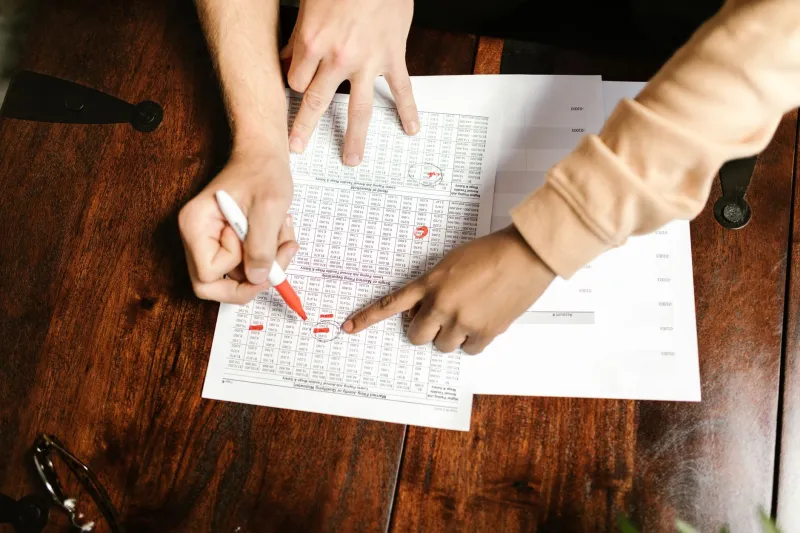
Keep a living spreadsheet, not a static one. Your budget should be a document you update in real time, not a plan you created six months ago and haven't revisited. Every deposit, every contract, every incidental expense should be recorded as it occurs. Couples who track spending in real time make better decisions than those who are working from memory.
Distinguish between vendor pressure and genuine value. The wedding industry is filled with talented, passionate professionals who genuinely believe in what they offer — and who are also running businesses. When a vendor presents an upgrade, ask yourself honestly: does this serve my vision, or does it serve their revenue? Both things can be true simultaneously, but the answer to that question should drive your decision.
The Bigger Picture: Beginning Married Life on Solid Ground
A wedding is one day. A marriage is a financial partnership that spans decades. The couples who begin that partnership having honored both their celebration and their financial health carry something into their marriage that no centerpiece upgrade can provide: the confidence of having made thoughtful decisions together under real pressure.
That confidence is worth protecting. Build your budget with honesty, revisit it with discipline, and invest it in the elements of your wedding that will still matter to you when the flowers have long since faded.