From the Fitting Room to the Altar: Everything You Need to Know About Altering Your Wedding Gown
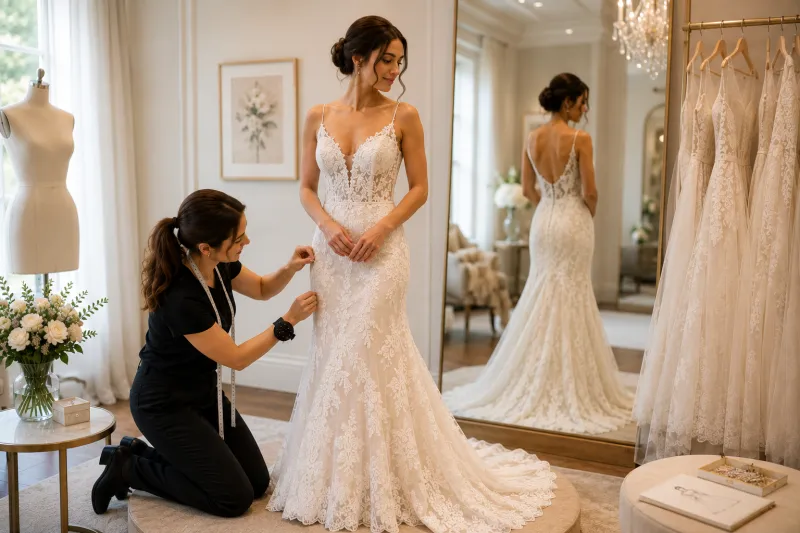
Photo: bridal seamstress pinning wedding dress alteration fitting room, via cdn.shopify.com
Finding your dream wedding dress is one of the most memorable moments of the engagement period. Yet for many brides, what follows — the alteration process — can feel unexpectedly overwhelming. Appointments, measurements, multiple fittings, and invoices that seem to grow with each visit can quickly transform excitement into anxiety. The good news? When you understand what to expect from the very beginning, the tailoring journey becomes far less daunting and far more empowering.
At Bride Official, we believe every bride deserves to feel perfectly dressed on her wedding day. That starts with a gown that fits her body — not the sample size it arrived in.
Why Nearly Every Wedding Dress Requires Alterations
Bridal gowns are manufactured in standard sizes that rarely correspond to any one person's exact measurements. Unlike ready-to-wear clothing, wedding dresses are designed with the expectation that they will be altered. In fact, most reputable bridal boutiques will inform you at the point of purchase that alterations are a separate, necessary expense.
Even a dress ordered in your closest size may require adjustments to the bust, waist, hips, length, or straps. Specialty fabrics — lace, silk charmeuse, tulle, crepe — each behave differently under a needle, which is why bridal alterations are a distinct specialty within the tailoring world.
The Most Common Alterations Brides Request
Understanding the typical scope of bridal alterations helps you plan both your timeline and your budget. Here are the adjustments most brides encounter:
Hemming and Length Adjustments This is among the most universal alterations, particularly for petite brides. Hemming a simple gown can be relatively straightforward, but gowns with lace trim, beading, or layered underlining require significantly more labor. A basic hem may start around $150, while a heavily embellished or multi-layered hem can exceed $500.
Taking In or Letting Out Seams Adjusting the fit through the bodice, waist, or hips is standard practice. Taking in the sides of a dress — bringing the silhouette closer to your frame — is generally simpler than letting it out, which depends on available seam allowance. Expect to budget $75 to $300 depending on the extent of work required.
Bustle Installation If your gown has a train, a bustle is typically necessary for comfort during the reception. There are several styles — American bustle, French bustle, ballroom bustle — and the right choice depends on your gown's design. Bustle work commonly ranges from $75 to $250.
Strap and Neckline Adjustments Slipping straps, a gaping back, or a neckline that sits incorrectly can be corrected by a skilled seamstress. These alterations range widely in complexity, from simple strap shortening ($30–$60) to full neckline restructuring ($150 and up).
Adding or Removing Structural Elements Some brides choose to add boning, cups, or a corset back for additional support. Others prefer to remove elements that feel uncomfortable or outdated. These modifications can add $100 to $400 or more to your final invoice.
Realistic Cost Expectations
One of the most common surprises brides encounter is the total cost of alterations. Industry estimates suggest that bridal alterations in the United States typically range from $300 to $1,000 for a standard gown, with heavily embellished or couture designs occasionally exceeding that range. Major metropolitan areas — New York, Los Angeles, Chicago — often carry higher labor rates than smaller markets.
When budgeting for your wedding, we recommend setting aside at least 10 to 15 percent of your dress budget specifically for alterations. If your gown cost $2,000, plan for $200 to $300 in tailoring fees at minimum, and adjust upward if your dress features extensive beadwork, multiple fabric layers, or a cathedral-length train.
How to Choose the Right Bridal Seamstress
Not every talented tailor is equally equipped to work on bridal wear. Wedding gowns involve specialty fabrics and construction techniques that differ considerably from everyday garments. When selecting a seamstress, consider the following:
- Request to see a portfolio of bridal work specifically, not just general tailoring.
- Ask about experience with your gown's fabric. A seamstress skilled in silk satin may have limited experience with delicate Chantilly lace.
- Inquire about insurance and liability policies. Reputable professionals will have a clear policy regarding damage.
- Read reviews from other brides. Word-of-mouth referrals from recently married friends or your bridal boutique are invaluable.
- Avoid the lowest bidder. Your gown is a significant investment. Prioritize skill and experience over price alone.
Many bridal boutiques offer in-house alterations or maintain a preferred list of trusted seamstresses. While you are not obligated to use these providers, their familiarity with the gowns they sell can be a genuine advantage.
The Alteration Timeline: When to Start and When to Stop
Timing is everything in bridal alterations. Beginning too early can be counterproductive — bodies change, and a dress altered six months before the wedding may not fit the same way on the day itself. Beginning too late creates unnecessary stress.
As a general guideline:
- First fitting: Schedule approximately three months before your wedding date.
- Subsequent fittings: Plan for two to four appointments spaced two to three weeks apart.
- Final fitting: Aim to complete all alterations no later than two weeks before the wedding. This leaves time for any last-minute adjustments.
If you are purchasing a gown that requires a production lead time of four to six months, coordinate your alteration schedule accordingly. Confirm with your boutique when the dress is expected to arrive, then plan your first fitting appointment from that date.
Protecting Your Gown During Fittings and Storage
Once alterations begin, proper care becomes essential. A few practices will protect your investment throughout the process:
Wear the right undergarments. Bring the exact undergarments — shapewear, strapless bra, or corset — you plan to wear on your wedding day to every fitting. The fit of your gown depends on these layers.
Transport the dress properly. Use a breathable garment bag rather than plastic, and hang the gown on a padded hanger. Avoid leaving it in a hot car or compressed in a trunk.
Store it thoughtfully. Between fittings, keep the gown in a cool, dry location away from direct sunlight. Humidity and heat can distort fabric and cause discoloration.
Avoid eating or drinking in the gown. Even during fittings, accidental stains on a partially altered dress can complicate the process.
Communicate openly with your seamstress. If something feels uncomfortable or looks incorrect after a fitting, say so. Skilled tailors welcome feedback — adjustments made early are always easier than corrections made late.
A Final Word on the Alteration Experience
The fitting room is where your wedding dress truly becomes yours. It is the space where a beautifully designed gown transforms into a reflection of your individual shape, posture, and presence. Approaching the alteration process with patience, a realistic budget, and a trusted seamstress will ensure that when you finally step into your dress on your wedding day, every detail feels exactly right.
At Bride Official, we encourage every bride to view alterations not as an inconvenience, but as the final — and most personal — chapter of finding her perfect gown.