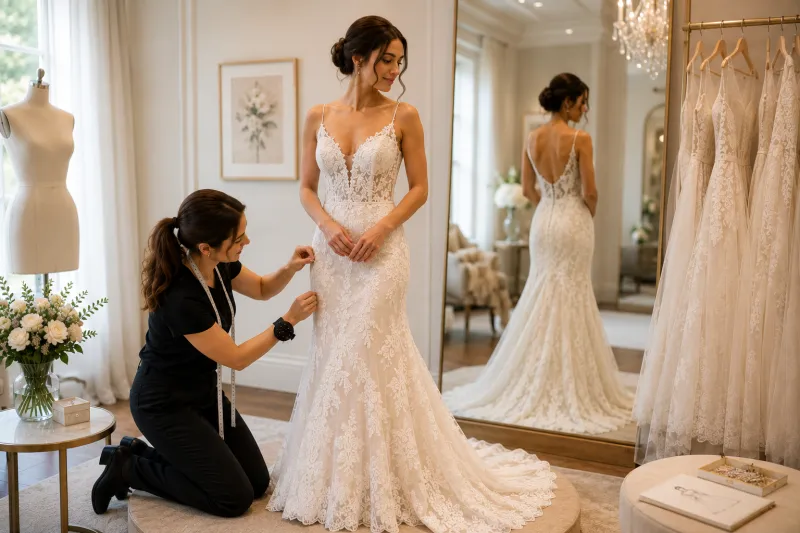
Setting the Scene: A Bride's Authoritative Guide to Wedding Guest Dress Codes
Photo: cara fealy choate from Austin, USA, CC BY 2.0, via Wikimedia Commons
A wedding is, at its core, a curated experience. Every element — the florals, the lighting, the menu, the music — contributes to a cohesive aesthetic that reflects the couple's vision. Guest attire is no different. When your guests arrive dressed appropriately for the occasion, the visual harmony of your wedding photographs, the atmosphere of your venue, and the overall elegance of the event are elevated in ways that are difficult to achieve otherwise.
And yet, the dress code conversation remains one of the most anxiety-inducing aspects of wedding planning for many brides. What does "cocktail attire" actually mean in 2025? Is it appropriate to request black tie at a Sunday afternoon wedding? What do you do when your well-meaning aunt shows up in jeans?
Bride Official is here to bring clarity — and a measure of confidence — to the entire process.
Understanding the Modern Dress Code Landscape
Traditional wedding dress code terminology was relatively standardized for decades. Black tie meant floor-length gowns and tuxedos. Cocktail attire meant knee-length dresses and suits. Semi-formal existed somewhere in between. Today, however, the spectrum has expanded considerably, and regional interpretations vary in ways that can genuinely confuse guests.
In the American South, for instance, "garden party" attire carries specific connotations of floral prints and sundresses that may not translate the same way in the Northeast. "California casual" is understood intuitively by West Coast guests but may leave East Coast attendees uncertain whether to bring a blazer. Urban weddings in cities like New York or Chicago tend to skew more formal by default, while destination weddings in coastal or resort settings often invite a relaxed elegance that resists easy categorization.
Recognizing that your guests bring their own regional and generational assumptions to any dress code language you use is the first step toward communicating more effectively.
The Major Dress Codes, Defined for Your Guests
To reduce ambiguity, here is how Bride Official defines the most commonly used wedding dress code categories — and how we recommend you communicate them:
White Tie (Ultra-Formal) The most formal of all wedding dress codes. Guests are expected to wear floor-length gowns in sophisticated fabrics, and male guests should wear tailcoats. White tie weddings are rare in the United States today and are typically reserved for evening ceremonies in grand venues such as historic estates or ballrooms.
Black Tie The gold standard of formal evening wear. Women should wear floor-length gowns or elegant formal separates; men should wear tuxedos. When specifying black tie, consider adding a brief note — "floor-length gowns encouraged" — to eliminate guesswork for guests who may be uncertain.
Black Tie Optional A more approachable variant that allows male guests to wear dark formal suits in lieu of tuxedos, and gives women the flexibility to wear cocktail-length formal dresses. This designation is increasingly popular at evening weddings where couples want a polished atmosphere without strict enforcement.
Cocktail Attire The most common dress code for American weddings today. Women typically wear knee-to-midi-length dresses or dressy separates; men wear suits with ties. Cocktail attire is appropriate for both afternoon and evening events and works across most venue types.
Garden Party / Semi-Formal Lighter, more romantic, and often associated with outdoor ceremonies. Floral prints, linen suits, and midi dresses are all appropriate. Be explicit in your invitation wording if you are using this designation, as "semi-formal" is interpreted differently across generations.
Casual or Beach Casual Appropriate for informal outdoor weddings, destination beach ceremonies, or backyard celebrations. Even here, we recommend specifying what you mean — "sundresses and linen encouraged" communicates more than "casual" alone.
Invitation Wording That Actually Works
The most effective dress code communication is direct, specific, and gracious in tone. Here are a few approaches that balance clarity with elegance:
- "Black tie attire requested. Floor-length gowns and tuxedos encouraged."
- "Cocktail attire. Think festive and polished — this is a celebration."
- "Garden party chic. We invite you to embrace floral prints, pastels, and warm-weather elegance."
- "Casual beach attire. Sandals welcome. Sunscreen recommended."
For invitations that must remain concise, include more detailed dress code guidance on your wedding website, where guests can read descriptions, view inspiration images, and find answers to common questions.
Our Official Stance on Black-Tie Bridal
Now for the question that generates more debate in bridal circles than perhaps any other: does a black-tie wedding still require the bride to wear a traditional white gown?
The short answer is no — and here is why Bride Official takes that position firmly.
The black-tie designation applies to your guests, not to you. As the bride, your attire is governed by your personal vision, your venue, and your aesthetic preferences — not by a dress code you created for others. A bride who chooses an ivory column gown, a blush A-line, or even a fashion-forward non-white design at a black-tie wedding is not in violation of any etiquette rule. She is simply making a choice that reflects her individual style.
What does matter at a black-tie wedding is that the bride's gown reads as appropriately formal for the occasion. A floor-length silhouette in a luxurious fabric — silk, satin, crepe, lace — will always feel congruent with a black-tie atmosphere, regardless of color. A casual or beach-appropriate dress would create a disconnect. The principle is harmony, not conformity.
For brides considering non-white gowns at formal events: the bridal industry has evolved significantly, and so has cultural acceptance. Champagne, blush, soft gold, and even bold colors are increasingly embraced at American weddings at every formality level. Your dress is your statement. Black tie simply asks that it be a well-tailored one.
Handling Guests Who Ignore the Dress Code
This is the reality no wedding planning guide likes to address directly: some guests will not follow your dress code. It may be due to a genuine misunderstanding, a limited wardrobe, or — occasionally — a willful indifference to your guidelines.
Here is our honest guidance:
Do not confront guests at the wedding. Regardless of what someone is wearing when they arrive, the moment is not the time for a correction. Doing so creates tension and distracts from the celebration.
Enlist a trusted intermediary before the event. If you are aware in advance that a specific guest is planning to dress inappropriately, have a close friend or family member gently communicate the expectation on your behalf.
Consider the spirit of the request. A guest who arrives in a dark suit instead of a tuxedo at a black-tie wedding has made an imperfect but reasonable choice. A guest in shorts at a formal evening ceremony is a different matter. Calibrate your response — or lack thereof — accordingly.
Accept imperfection gracefully. Your wedding photographs will capture your happiness, your love, and the beauty of the day. A single guest's outfit will not define the event.
The Bigger Picture: Dress Codes as Hospitality
Ultimately, communicating a dress code is not about imposing rules on your guests — it is about helping them feel appropriately prepared and comfortable within the context of your event. Guests who know what to expect are guests who arrive feeling confident, which contributes to the warmth and energy of your celebration.
Approach your dress code communication as an act of hospitality rather than an exercise in authority, and you will find that most guests are genuinely grateful for the guidance.
At Bride Official, we believe that a well-dressed wedding — from the bride's gown to the last guest at the reception — is one of the most beautiful expressions of care that a couple can offer. Set your expectations clearly, communicate them graciously, and then release the outcome. The rest, as they say, is celebration.