Dressed to Last: How to Choose a Wedding Gown That Feels Just as Beautiful at Hour Eight as It Did at Hour One
There is a moment that happens in nearly every bridal appointment. A bride steps into a gown, catches her reflection, and feels something shift. The dress is extraordinary. She says yes before she has walked ten steps in it, before she has sat down, before she has imagined standing in it for eight, nine, or ten hours straight.
The visual experience of trying on a wedding gown is powerful—sometimes overwhelmingly so. But the physical experience of wearing one through a full day of celebrations is an entirely different matter. Weight, structure, layering, and fabric behavior are the invisible forces that will determine whether you float through your reception or quietly count the minutes until you can sit down. Understanding those forces before you commit to a gown is one of the most practical and self-honoring decisions you can make as a bride.
Why Physical Comfort Is a Style Decision
Comfort is not the opposite of beauty in bridal fashion. It is, in fact, one of its most essential ingredients. A bride who is physically at ease moves differently—more freely, more joyfully—and that ease reads as confidence in every photograph and in every memory her guests carry home.
When brides describe their wedding day regrets, physical discomfort ranks consistently high: a gown that dug into the ribs during dinner, a train so heavy it required constant management, a boned bodice that made deep breathing impossible during vows. These are not trivial complaints. They are signals that the physical architecture of a dress was never fully considered during the selection process.
Approaching your gown search with both your eyes and your body will lead you to a dress that serves you completely.
Understanding Fabric Weight and What It Means for Your Day
Fabric is the single greatest determinant of how a gown will feel across an extended wear period. Heavier fabrics—duchess satin, heavy mikado, layered organza with multiple petticoat underskirts—carry significant physical weight that accumulates at the hips and lower back over the course of hours. For brides who plan to dance extensively or who have any sensitivity in the lower back or hips, this is a critical consideration.
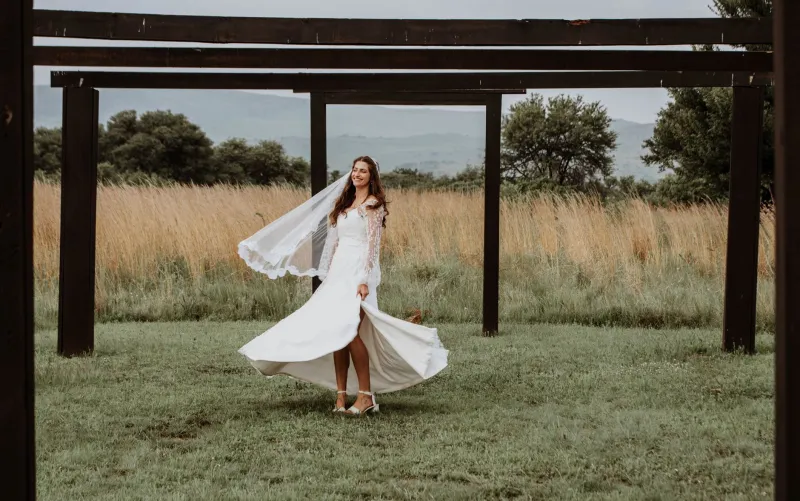
Lighter alternatives such as chiffon, charmeuse, crepe, and soft tulle offer a dramatically reduced physical burden while still photographing beautifully. A chiffon gown that appears full and romantic in imagery may weigh a fraction of what a structured ball gown does. Silk charmeuse, while delicate in handling, drapes against the body with almost no perceptible weight.
When you are in the fitting room, pay attention not just to how the fabric looks but to how it moves when you walk, how it responds when you sit, and whether you notice its presence on your body. A gown that feels heavy in the salon will feel heavier still after five hours of celebration.
The Hidden Architecture: Boning, Structure, and Silhouette
Many bridal gowns are architectural achievements. Corset-style boning, structured bodices, and built-in foundations create dramatic silhouettes—but they also impose physical demands on the wearer. Boning that creates a perfect hourglass shape in a photograph can restrict breathing, limit movement, and cause genuine discomfort if the fit is not precisely calibrated to your body.
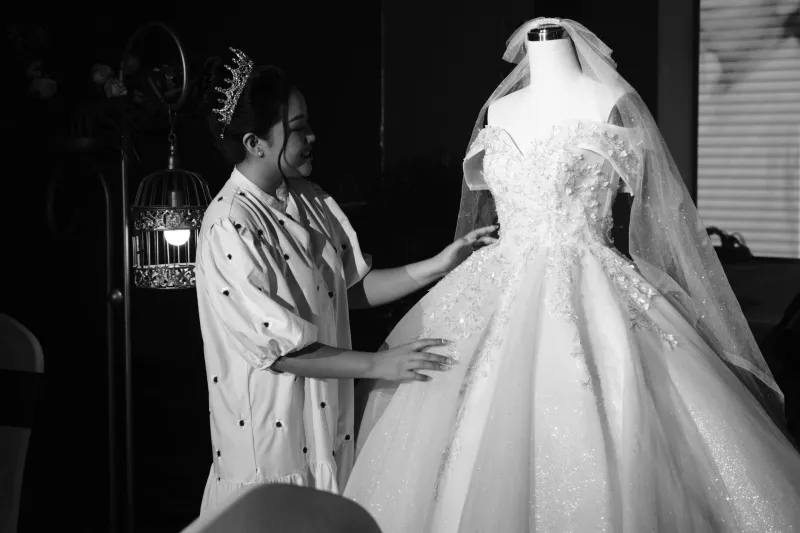
This is where alterations become not merely aesthetic but functional. A skilled bridal seamstress can adjust boning placement, soften a structured bodice, or add panels that allow the gown to move more naturally with your body. Before assuming a structured gown is not for you, ask whether the construction can be modified to accommodate greater ease.
Alternatively, many contemporary designers have developed gowns that achieve structural drama through cut and fabric rather than internal boning. A well-cut crepe column gown, for example, can appear just as polished and intentional as a boned ballgown—with considerably more freedom of movement.
Layering and the Underpinnings That Shape Your Day
The layers beneath a gown are rarely discussed in bridal appointments, yet they profoundly affect the wearing experience. Petticoats and crinolines required to support full skirts add both weight and heat. In warmer climates, during summer weddings, or in venues with limited climate control, this layering can become genuinely uncomfortable.
Ask your bridal consultant directly: what undergarments does this gown require? What is recommended versus what is necessary? Some gowns are designed to stand on their own without additional support layers, while others depend on specific foundations to achieve their intended shape.
Seamless, supportive undergarments—whether built into the gown or worn beneath it—should be part of every fitting. Trying on a gown without the undergarments you intend to wear on your wedding day gives you an incomplete picture of how the dress will actually fit and feel.
Train Length and the Question of Mobility
A cathedral train is among the most breathtaking sights in bridal fashion. It is also one of the most physically demanding elements a bride can choose. Long trains require constant awareness: they must be bustled for the reception, managed during the ceremony, and handed off to attendants during key moments.
If you are drawn to a dramatic train, spend significant time in the fitting room practicing the management of it. Walk, turn, sit, and navigate a threshold. Then consider whether you want to spend mental and physical energy on this throughout your wedding day, or whether a sweep train or detachable option might offer a similar visual impact with considerably less logistical complexity.
Detachable trains have become an elegant solution for brides who want the ceremony drama without the reception burden. Many designers now offer this construction as a standard option, and a skilled seamstress can often add a detachable element to an existing design.
Asking the Right Questions in the Fitting Room
Armed with this knowledge, your bridal appointments become richer and more productive. Rather than evaluating gowns solely on appearance, begin incorporating physical assessment into every try-on.
Sit down in the gown and hold that position for several minutes. Can you breathe normally? Does the boning shift or dig? Take a full flight of stairs if the salon allows it. Walk across the room briskly, then slowly, and notice whether the hem catches or the train pulls. Raise your arms above your head and assess whether the bodice rises with you in an uncomfortable way.
Ask the consultant about the approximate weight of the gown and whether lighter-weight alternatives in a similar silhouette are available. Request information about what alterations are possible if a particular element of the construction feels restrictive.
Your instincts during these tests are valid data. A small discomfort in a fitting room under ideal conditions will be magnified after hours of dancing, dining, and celebrating.
The Confidence That Comes from Ease
There is a particular kind of radiance that belongs to a bride who is entirely comfortable in her gown. It is not simply happiness—it is physical freedom expressed as joy. When your dress fits your body precisely, moves with you rather than against you, and asks nothing of your attention, you are released to be fully present in every moment of your wedding day.
Choosing a gown that feels as extraordinary as it looks is not a compromise. It is the highest standard of bridal dressing—and it is entirely within reach when you know what to look for.