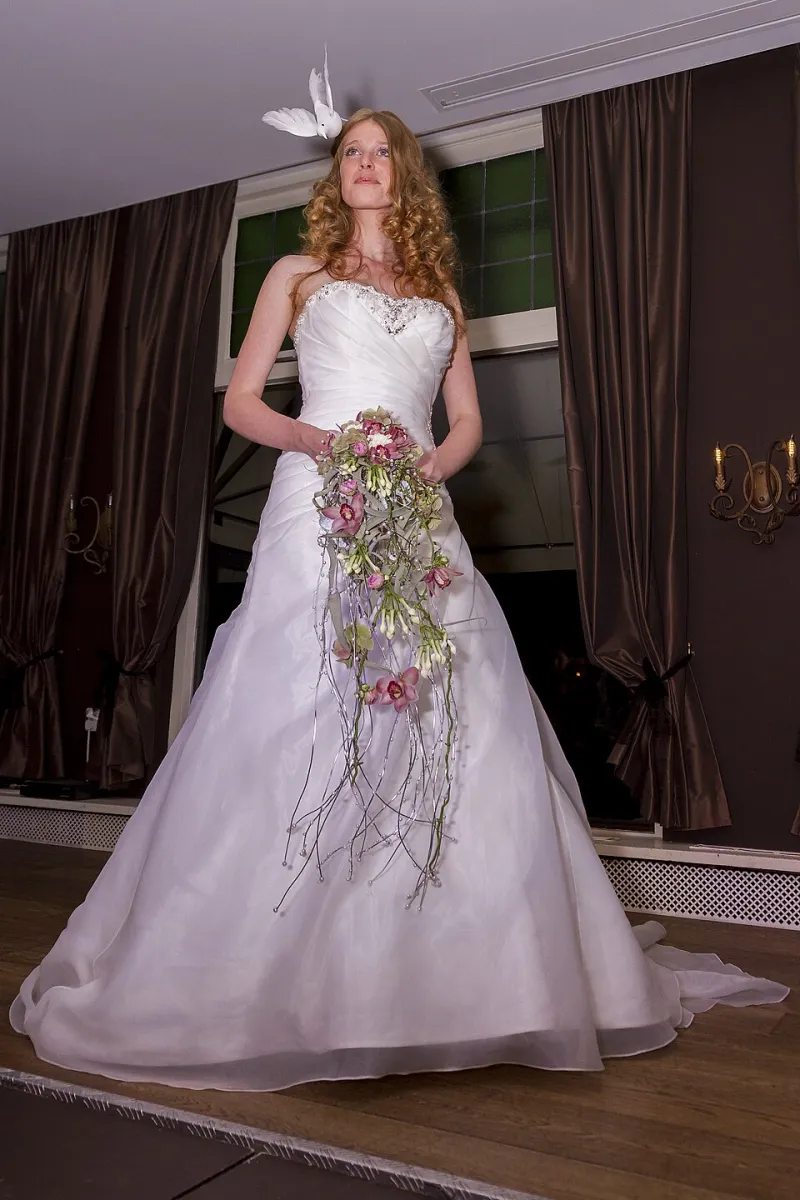
Dressed for the Venue: How to Choose a Wedding Gown That Honors Your Setting
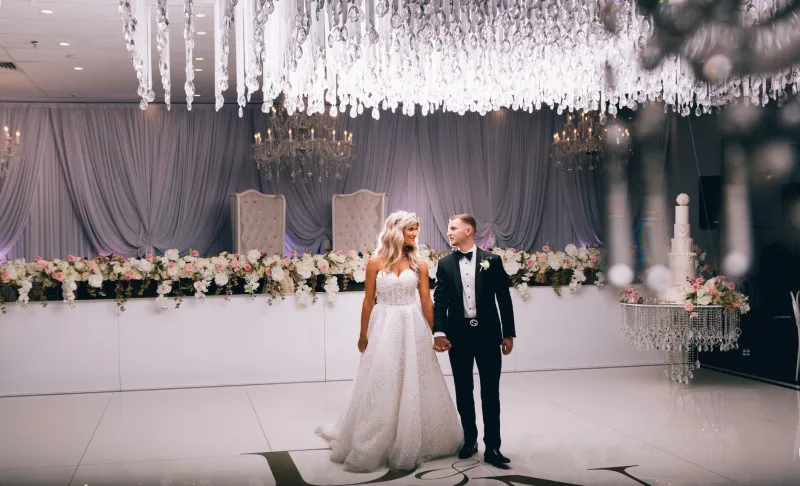
Much of the conversation around wedding dress codes centers on what guests should wear. But there is a quieter, equally important question that every bride deserves to explore: what does your venue expect from you?
The truth is, your setting carries its own aesthetic vocabulary — a language of formality, tradition, and atmosphere that your gown should speak fluently. That doesn't mean surrendering your personal vision. It means understanding the character of your chosen space well enough to dress in harmony with it, rather than in conflict. Whether you're exchanging vows beneath the vaulted ceilings of a historic cathedral or signing a marriage license at a sun-drenched courthouse, the venue you've chosen is already telling part of your story. Your gown should tell the rest.
Why Venue and Gown Must Speak the Same Language
Consider the experience of walking into a candlelit, ivy-covered estate ballroom wearing a breezy, thigh-high mini dress. Or arriving at a casual oceanfront ceremony in a heavily beaded, cathedral-length ball gown. Neither choice is inherently wrong — but both create a visual dissonance that can distract from the beauty of the moment itself.
Venues carry formality levels, architectural personalities, and even regional identities that naturally inform the aesthetic of the day. A thoughtfully chosen gown doesn't just flatter the bride — it completes the visual narrative of the entire event. It signals to guests that every detail has been considered, and it allows the ceremony space to feel cohesive rather than contradictory.
Black-Tie and Ballroom Venues
Grand hotel ballrooms, historic estate manors, and formal private clubs represent the highest tier of wedding formality. These spaces were designed for grandeur, and they reward brides who lean into it. Floor-length silhouettes — ball gowns, A-line styles, and sleek column dresses — are the natural companions to gilded ceilings and marble floors.
Luxurious fabrics such as duchess satin, silk mikado, and structured tulle carry the weight and presence that these rooms demand. Intricate beadwork, lace overlays, and dramatic trains are not merely acceptable here — they are expected. If you've always dreamed of a sweeping cathedral train, a black-tie venue is precisely the right stage for it.
That said, even within the black-tie category, your personality should remain visible. A sleek, architectural crepe gown can be just as appropriate as a voluminous ball skirt in a formal ballroom setting — provided the overall impression reads polished and intentional.
Rustic Barns and Garden Estates
One of the most popular wedding settings across the United States, the barn venue presents a uniquely layered challenge. Rustic doesn't mean casual, and many barn weddings are, in fact, black-tie affairs. The key is distinguishing between the venue's aesthetic and its formality level.
For a formal barn wedding, consider gowns with romantic, textural details — lace, embroidery, or delicate floral appliqués — that feel at home in a natural environment without sacrificing elegance. Fabrics like chiffon, organza, and lace tend to photograph beautifully in outdoor or barn settings, catching light in a way that stiffer, more structured fabrics sometimes do not.
For a more casual barn or garden ceremony, a flowing boho-inspired silhouette, a tea-length gown, or even a beautifully tailored bridal jumpsuit can feel entirely appropriate. Practicality matters here, too: consider whether your gown's hem will survive a walk across grass or a gravel pathway, and plan accordingly.
Houses of Worship: Cathedrals, Churches, and Synagogues
Religious ceremony venues carry their own set of expectations — some written, many unspoken. Many houses of worship in the United States have explicit guidelines around modesty, often requiring covered shoulders, sleeves, or necklines that avoid deep plunging cuts. It is always advisable to confirm these requirements directly with your officiant or venue coordinator before committing to a gown.
Beyond the practical, religious venues tend to call for a certain reverence in presentation. Heavily embellished party-style gowns or very casual silhouettes can feel out of register in a solemn, sacred space. Classic elegance — think timeless lace, graceful A-lines, and modest necklines — tends to feel most harmonious here.
For brides who love a strapless or low-back silhouette, a coordinating bolero, cape, or lace jacket offers a beautiful solution that honors the venue's character during the ceremony while still allowing for the full look reveal at the reception.
Courthouse and Civil Ceremony Venues
A courthouse or civil ceremony is a deeply personal choice, and it deserves a gown — or bridal ensemble — that reflects that intimacy. These settings call for something that photographs beautifully in a simpler environment, often without the sweeping backdrops of a more traditional venue.
Short dresses, chic midi silhouettes, and refined bridal suits have all found a natural home in the courthouse ceremony context. Fabrics with clean lines and subtle texture — crepe, satin, and even tailored suiting — tend to feel most appropriate. The priority here is that you look and feel unmistakably bridal, even in a scaled-down setting.
Don't underestimate the power of accessories in a courthouse context. A sculptural headpiece, a beautifully arranged bouquet, or a pair of statement earrings can elevate even the simplest ensemble into something that reads as genuinely ceremonial.
Destination and Outdoor Venues
Beach ceremonies on the Gulf Coast, vineyard weddings in Napa Valley, mountain ceremonies in Colorado — destination and outdoor venues are among the most visually stunning settings a bride can choose. They are also among the most demanding in terms of practical considerations.
For beach and coastal settings, lightweight fabrics are essential. Heavy satin or structured ball gowns can become unwieldy in heat and humidity, and long trains are often impractical on sand. Flowing chiffon, soft tulle, and lace are far more forgiving, and they move beautifully in a coastal breeze.
For mountain or vineyard settings, layering options become relevant — a bridal wrap, a long-sleeved lace topper, or even a coordinating coat can protect against unexpected temperature drops without sacrificing style. Always account for terrain when selecting hem length and footwear.
Letting the Venue Inspire, Not Dictate
Perhaps the most important principle in aligning your gown with your venue is this: inspiration is not obligation. Understanding your venue's character should clarify your choices, not restrict them. A bride who has always dreamed of a dramatic ball gown can absolutely wear one at a garden ceremony — provided she makes intentional, thoughtful choices about fabric, styling, and silhouette that bring the two elements into conversation rather than conflict.
The goal is a wedding day where your gown and your venue feel like they were always meant to share the same frame. When that alignment is achieved, the result is something genuinely extraordinary — a visual cohesion that elevates every photograph, every memory, and every moment of the day you've spent so long imagining.
Your venue has set the stage. Now dress the part — beautifully, intentionally, and entirely on your own terms.