Your Wedding, Your Voice: How to Stay True to Yourself When Everyone Has a Strong Opinion
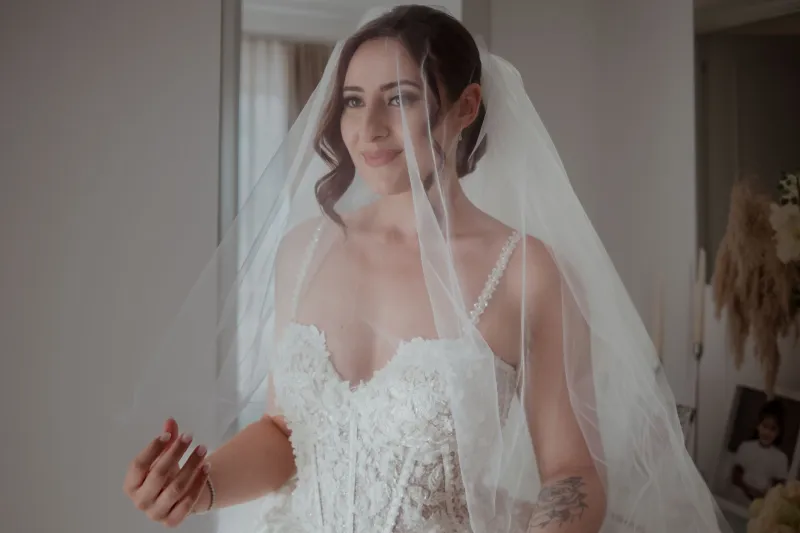
The engagement ring has barely settled on your finger before the opinions arrive. Your mother has thoughts about the venue. Your future mother-in-law has feelings about the color palette. Your college roommate sends you seventeen Pinterest boards before you've had a chance to form a single preference of your own. And somewhere beneath all of that noise, there is a quiet, steady voice — yours — trying to be heard.
Learning to trust that voice may be the single most valuable thing you do between the proposal and the ceremony. Not because outside perspectives are inherently wrong, but because no one else will be standing where you stand on your wedding day. No one else will carry the weight of that moment, or the memory of it, the way you will.
Why the Noise Gets So Loud
Wedding planning exists at the intersection of deep personal meaning and deeply held cultural expectations. For many families, a wedding is not simply a celebration of two people — it is a statement of identity, a nod to heritage, and a reflection of values that extend well beyond the couple at the center of it. That context helps explain why opinions can feel so intense, so persistent, and sometimes so difficult to dismiss.
Add social media to the equation, and the pressure compounds significantly. Curated wedding content floods every platform, establishing unspoken standards for what a wedding should look like, how a bride should dress, and which details signal a celebration done correctly. It is easy to scroll through images of elaborate floral installations and editorial-quality tablescapes and quietly begin to question whether your own instincts are sophisticated enough.
They are. They always were.
Distinguishing Genuine Reflection from Outside Pressure
One of the most useful habits a bride can develop is learning to distinguish between a preference she genuinely holds and one she has absorbed from external sources. These can feel remarkably similar in the moment, which is why it helps to create a small, deliberate practice around decision-making.
Before acting on any piece of advice or inspiration, give yourself a waiting period — even twenty-four hours can be enough. Ask yourself: Does this feel right for me, or does it simply feel impressive? There is a meaningful difference between the two. Decisions rooted in genuine resonance tend to feel settled and calm, even when they are unconventional. Decisions made under social pressure often carry a faint undercurrent of anxiety, as though you are performing a version of yourself rather than expressing one.
Journaling can be a surprisingly effective tool here. Writing out your thoughts about a particular decision — without the presence of family members or the influence of a screen — allows you to access your own reasoning in a cleaner, less cluttered way.
Setting Boundaries Without Starting Arguments
Protecting your vision does not require conflict. In most cases, the people offering strong opinions are doing so out of love, excitement, or a genuine desire to contribute to something meaningful. Acknowledging that motivation, even when the input itself is unwelcome, tends to defuse tension before it escalates.
A few approaches that tend to work well:
Invite contribution in specific, bounded ways. Rather than opening a general conversation about your wedding plans, ask for input on a single, low-stakes element — perhaps the rehearsal dinner menu or the selection of a ceremony reading. When people feel heard and included in a defined area, they are often less likely to press into areas where you have already made your decisions.
Use the phrase "we've decided" deliberately. Speaking as a unified couple communicates that a decision is final without placing blame or inviting further debate. "We've decided to keep the ceremony intimate" is both honest and complete.
Delay, rather than deflect. If you are not ready to defend a choice, you do not have to. A simple "We're still working through a few things — I'll keep you posted" buys time without dishonesty.
When the Opinions Come from People You Love Most
The most emotionally complicated opinions are rarely the ones from acquaintances or social media strangers. They come from a parent who has imagined your wedding since you were small, or a sibling who feels entitled to a role in the planning because of the closeness of your relationship. These conversations require more care, but the fundamental principle remains the same: your wedding day belongs to you and your partner first.
If a parent is contributing financially to your wedding, it is reasonable to involve them in decisions that align with their investment — but financial contribution does not automatically translate into decision-making authority over every detail. Having a clear, early conversation about which areas of the planning are open to collaboration and which are not can prevent significant friction later.
When a loved one's vision conflicts directly with yours, try leading with appreciation before explanation. "I know how much this matters to you, and that genuinely means a lot to me" creates relational warmth before you introduce a boundary. From that place of warmth, a gentle but clear statement of your own preference lands with far less damage.
Reclaiming the Planning Process as Your Own
At its best, wedding planning is an act of self-expression — a rare opportunity to build something from the ground up that reflects who you are and what you value as a couple. When outside voices crowd that process, it is worth deliberately reclaiming it.
Consider scheduling regular planning sessions with your partner that are entirely free of phones, family input, and social media. Use that time to revisit the original feelings that drew you to particular ideas — the reason you loved a specific venue before anyone else weighed in, or why a non-traditional dress felt right before the comparisons began.
Remember, too, that a wedding does not need to justify itself. You do not owe anyone an explanation for why you chose a small guest list over a grand reception, or why your color palette defies seasonal convention, or why you opted for a courthouse ceremony followed by a dinner party. Your choices are valid because they are yours — not because they are defensible to an audience.
The Wedding You Will Actually Remember
Years from now, you will not remember which opinions you accommodated or which trends you incorporated because they were popular at the time. You will remember how the day felt. You will remember whether it reflected something real about you and your partner, or whether it felt like a performance staged for the benefit of others.
Trusting your instincts is not selfishness. It is the most honest thing you can bring to one of the most significant days of your life. And when you stand at the altar — surrounded by the people you love, in a celebration that genuinely reflects who you are — that quiet, steady voice inside you will know it made the right call.