Dress Dollars: A Smart Bride's Guide to Spending Wisely on the Gown of Your Dreams
Photo: Dave Hitchborne, CC BY-SA 2.0, via Wikimedia Commons
For many American brides, the wedding gown represents the single most significant fashion purchase of their lives. Yet few decisions carry as much emotional weight — or as much financial confusion. Prices range from a few hundred dollars to well into five figures, and without a clear understanding of what drives those numbers, it is easy to overspend, underspend, or simply feel overwhelmed standing in a bridal boutique dressing room.
This guide is designed to change that. By examining the real forces behind wedding dress pricing and offering practical strategies for every price point, Bride Official helps you walk into any appointment — boutique, trunk show, or sample sale — with confidence and clarity.
What Actually Determines the Price of a Wedding Gown?
Before setting a budget, it helps to understand exactly what you are paying for. Wedding dress pricing is shaped by several intersecting factors, and recognizing each one allows you to make deliberate trade-offs rather than arbitrary cuts.
Designer and Brand Positioning A gown bearing the label of a well-established designer — think Vera Wang, Monique Lhuillier, or Reem Acra — carries a premium that reflects not just craftsmanship but brand heritage, editorial presence, and the prestige associated with wearing a recognized name. Mid-tier labels such as Essense of Australia or Maggie Sottero offer comparable construction at a meaningfully lower price point, while newer independent designers may deliver exceptional quality without the legacy markup.
Fabric Selection The textile is often the single largest cost driver in a gown's construction. Hand-beaded French lace, duchess satin, and silk charmeuse are among the most expensive materials in bridal manufacturing. Polyester blends, chiffon, and stretch crepe can achieve equally beautiful results at a fraction of the cost. When a gown feels luxurious to the touch, the fabric is usually why.
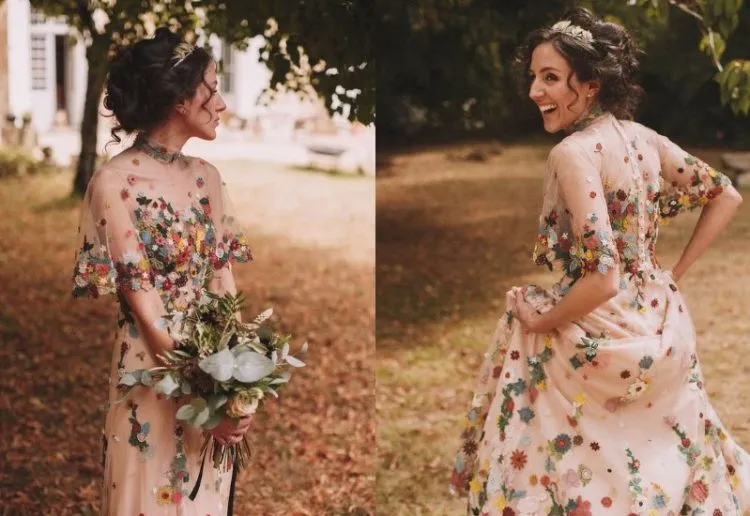
Embellishments and Labor Handwork is expensive because it is time-consuming. Intricate beading, hand-sewn appliqués, three-dimensional floral details, and custom embroidery all require skilled artisan hours that translate directly into the final retail price. A heavily embellished ballgown will almost always cost more than a sleek column silhouette in the same fabric, even from the same designer.
Customization and Made-to-Order Construction Off-the-rack gowns ordered in standard sizing are the most economical option. Made-to-measure or fully custom designs — where a gown is built to your precise specifications — involve additional pattern drafting, fittings, and production time, all of which increase cost considerably.
Budgeting by Price Point: What to Expect
Understanding what each tier realistically offers helps you set expectations and shop strategically.
Under $1,000 This range is more accessible than many brides assume. Retailers such as BHLDN (Anthropologie's bridal line), Azazie, and a number of online-direct brands offer well-constructed gowns in this category. Silhouettes tend to be cleaner, embellishments more restrained, and fabric choices more modest — but the results can be genuinely stunning. Sample sales and pre-owned gown marketplaces like StillWhite and PreOwnedWeddingDresses.com are also excellent sources for designer gowns at deeply reduced prices.
$1,000–$3,000 This is where the mid-market lives, and it is arguably the most competitive tier in American bridal retail. You will find a wide selection of reputable labels, more varied silhouettes, and higher-quality fabrics. Many brides in this range are able to achieve a look that feels both elevated and personalized without stretching their overall wedding budget.
$3,000–$6,000 At this level, construction quality rises noticeably. Gowns in this tier often feature finer fabrics, more intricate detail work, and the kind of fit-and-finish that photographs exceptionally well. Designers such as Justin Alexander, Pronovias, and Lazaro occupy this space with collections that balance artistry and accessibility.
$6,000 and Above This tier is defined by couture-adjacent craftsmanship, exclusive fabrics, and significant brand prestige. For brides who prioritize the gown above all other wedding expenditures, this investment can be deeply meaningful. However, it is worth noting that the law of diminishing returns applies here — a $10,000 gown is not necessarily twice as beautiful as a $5,000 one.
Timing Your Purchase: When You Shop Matters
One of the most underutilized tools in a bride's budgeting arsenal is timing. The bridal industry operates on a calendar, and shopping with that calendar in mind can yield real savings.
Trunk Shows are events where a designer's full collection is temporarily displayed at a boutique, often with the designer or a representative present. Purchasing during a trunk show frequently comes with perks: discounts, complimentary customizations, or priority production scheduling.
Sample Sales occur when boutiques clear floor inventory to make room for new collections. Gowns that have been tried on repeatedly are sold at steep discounts — sometimes 50 to 70 percent off retail. These events reward flexibility in sizing and timeline.
Off-Season Shopping — specifically, shopping in January through March or August through October — tends to offer more boutique availability, less competitive pressure, and occasional promotions as retailers manage inventory between peak seasons.
Insider Strategies Worth Knowing
A few additional tactics can help you maximize value regardless of your budget tier.
- Separate the gown from the accessories. Many brides overspend by purchasing a veil, belt, and headpiece from the same boutique at full retail. These items are often available at significant savings through independent vendors or online retailers.
- Ask about price matching. If a gown you love is available through multiple authorized retailers, it is entirely appropriate to ask whether a boutique will match a competitor's price or offer an equivalent incentive.
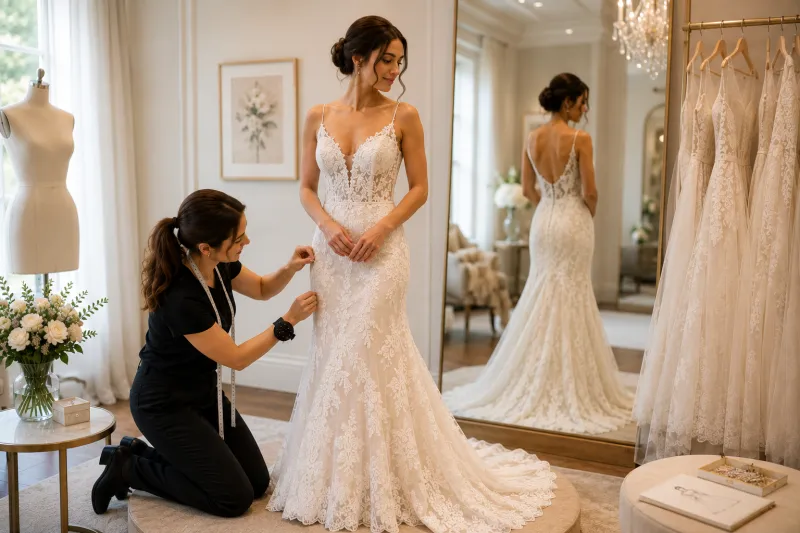
- Consider alterations in your budget from the start. A well-fitted $1,500 gown will almost always outshine a poorly fitted $4,000 one. Allocating $300–$600 for professional alterations is a wise investment at every price point.
- Negotiate diplomatically. Boutiques have more flexibility than many brides realize, particularly on floor samples, discontinued styles, or during slow booking periods. A respectful conversation about pricing is rarely unwelcome.
Your Gown, Your Investment
The most important thing to remember is that a wedding gown's value is not measured exclusively in dollars. It is measured in how you feel when you stand in front of a mirror and know — with certainty — that this is the dress. That feeling is available at every price point, provided you shop with knowledge, intention, and a clear sense of what matters most to you.
At Bride Official, we believe that every bride deserves to feel extraordinary on her wedding day, regardless of what her budget looks like. The gown that does that for you is the right gown — full stop.